Reviews
Part of Social media agency services: scope, team, data and exit
Which red flags social media agencies show
Social media agencies red flags in 2027 include guaranteed results, vague scope, hidden staff, agency-owned assets, excessive access, weak proof, and no exit plan.
What to take away
- A red flag is a request for evidence, not proof of misconduct. One issue usually has an innocent explanation.
- Four items justify pausing a dealguaranteed outcomes, a vague scope at a firm price, agency-owned accounts, and no exit terms.
- Grant the narrowest platform role that covers the work, and keep pages, ad accounts and data in client-owned systems.
- Verify case studies against a baseline, a measurement period and a reference who can discuss comparable work.
- Ask for a data map, an incident contact and a written transition clause before you sign.
Red flags, ranked by what they cost you
| Red flag | What it signals | Evidence to request | Contract fix |
|---|---|---|---|
| Guaranteed results | No baseline or control | Baseline, method, client dependencies | Bounded target with stated limits |
| Vague scope, firm price | Change-order revenue | Deliverables, assumptions, extras rates | Fixed scope schedule |
| Agency-owned accounts | Vendor lock-in | Ownership and access record | Client-owned assets, role access |
| Unnamed delivery team | Pitch team is not the work team | Committed names, allocation, location | Named leads in the statement of work |
| No exit terms | Dependency the agency plans to use | Notice, handover, deletion plan | Tested transition clause |
| Unverifiable case studies | Marketing document, not evidence | Period, scope, method, limitations | Reference calls as a condition |
A guarantee with no conditions
An agency that guarantees virality, follower growth, revenue or continued platform access is promising something it does not control. Ask for the baseline, the method and what the client must supply.
Then ask which outcome sits in the contract, who controls it, and how it is measured when the platform changes its rules. A guarantee without those conditions is a red flag.
The FTC advertising FAQs for small business cover the truth-in-advertising rules on claims you and your agency publish together.
Scope gaps that turn into change orders
Normalize every proposal against one written scope, then compare what social media agencies charge on identical deliverables. A package can omit formats, complexity, markets, revisions and service hours.
It can also omit seniority, tooling, usage rights and creator fees. Media fees and client inputs often stay vague, and that is where change orders begin. Require an extras schedule with fixed rates instead of a promise to be fair.
Access you should never hand over
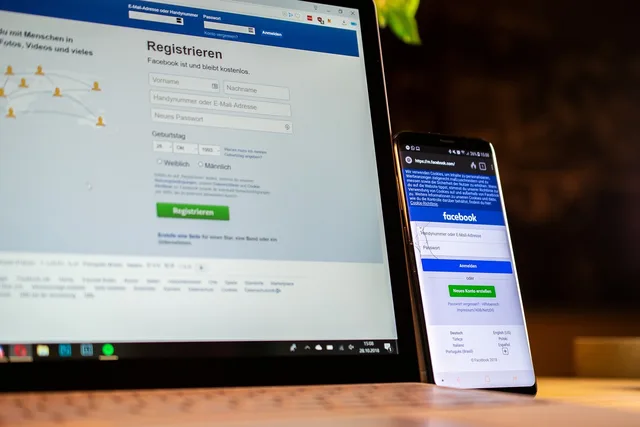
Meta separates Page access into full control, partial access, task access and community management. Full control can include changing or removing other people's access, and deleting the Page. Assign the narrowest role that covers the named work. Keep the Business Manager, ad accounts, pixels, catalogs and domains under client ownership.
Facebook Page access levels
Full control
- Can change access
- Yes
- Can delete Page
- Yes
- Assign narrowest role
- Avoid
Partial access
- Can change access
- Limited
- Can delete Page
- No
- Assign narrowest role
- If needed
Task access
- Can change access
- No
- Can delete Page
- No
- Assign narrowest role
- Preferred
Community manager
- Can change access
- No
- Can delete Page
- No
- Assign narrowest role
- For community
Shared passwords and personal logins weaken the security review and the handover. Agency size does not change the rule. Ogilvy, founded in 1948 and owned by WPP, staffs accounts across offices, so named roles matter more, not less.
Verify claims before you trust the deck
Vendor-published work is a marketing document, not an audit, which is why social media agencies case studies need reading against a baseline. Look closer when testimonials lack direct experience, results lack baselines, or client names lack permission to be quoted.
Ask for the publisher, the period, the agency's scope, the method and the limitations. Ask for the commercial context too.
Monks, formerly Media.Monks and part of S4 Capital, publishes work that spans many markets, so both the client and the scope need checking.
Test the people who will do the work
Ask which people are committed to the account, at what allocation, which city, and which relevant work sits behind them. Ask about supervision and the replacement process. A network can pitch with senior staff and then staff the account from another office.
Ask who reviews and approves a post before it publishes. Ask for the name and number of the person who handles an urgent platform issue. Working tests during a pitch reveal more about judgement than a credentials deck does.
Example clauses worth insisting on
"Client owns all social accounts, ad accounts, pixels, catalogs, domains, audiences, analytics and source files. Agency access ends within five business days of termination."
"Any performance commitment states the baseline, the measurement window, client dependencies, exclusions and the remedy if the target is missed."
Ask for both in the draft statement of work. Verbal assurances rarely survive a change of account director.
Data, security and exit terms
A provider that cannot explain personal-data activities, storage location, access and subprocessors cannot support diligence. Require a written data map, retention and deletion rules, and a named incident contact.
Privileged access makes the agency part of your security surface. CISA's advisory on managed service provider security sets out shared customer and provider duties for authentication, monitoring and incident handling. The NIST Privacy Framework starting guide describes a voluntary process for finding privacy risk and assigning owners.
Read social media agencies reviews for complaints about access handover, not only for creative praise. The contract should cover notice, transition, access removal, campaign continuity, source files, creator rights, invoices, data return, and knowledge transfer. Resistance to a practical exit plan suggests dependency the agency expects to use.
Common questions
Does one red flag disqualify an agency?
Not always. Ask for evidence, then judge severity, repetition and the response. A corrected contract often resolves a single issue.
Should an agency own our social accounts?
Usually the client should own its business assets and grant role-based access. Platform structures and current professional advice set the details.
What is the most serious red flag?
A repeated refusal to provide evidence or correct a material uncertainty. That applies to legality, security, ownership and money.
How many people need full Page control?
As few as possible. One internal owner plus a backup is usually enough, with task access for the agency team.