Strategy
How to Improve Small Business Social Media: The Parts Worth Your Time
Improve small business social media by fixing one customer journey, securing access, using real customer language, strengthening proof, and comparing useful cohorts.
What to take away
- Fix access and the customer handoff firstrepair identity, destinations, proof, and response ownership before you start one audience, one 90-day outcome, one primary channel, and one useful action.
- Compare like content in native analytics, then reconcile the pattern with inquiries, sales, and service evidence.
How to improve small business social media starts with removing friction, not posting more. Audit one customer journey from discovery to a completed business action, then repair the weakest handoff.
Clarify the next 90-day outcome
Choose one audience, one business outcome, one primary channel, and one meaningful next action. Record current capacity and the evidence that will show progress. This prevents broad reach from hiding poor-fit demand.
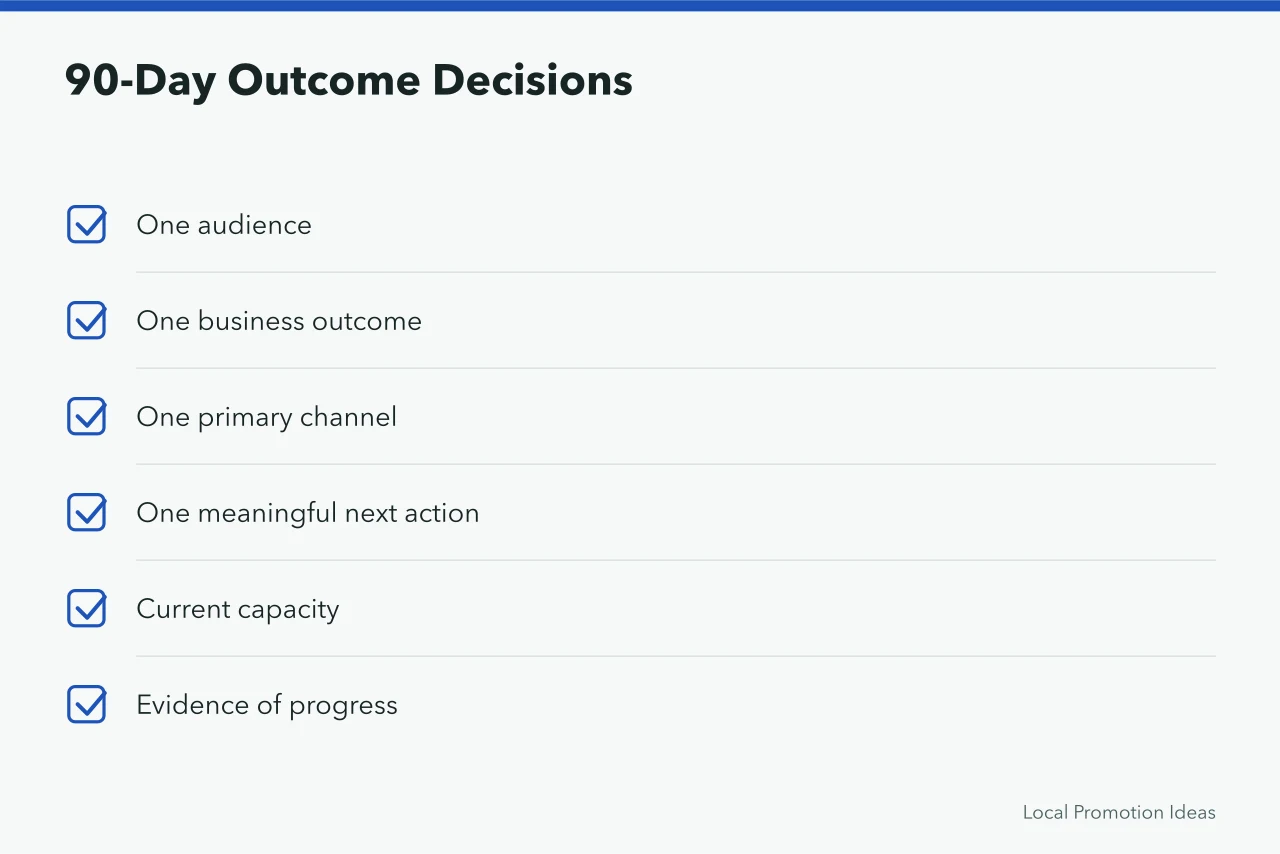
A typical 90-day plan runs in three 30-day steps:
- Days 1 to 30audit and repair access, profile, and the top three destination links.
- Days 31 to 60publish four posts built from customer questions. Track retention and inquiries each week.
- Days 61 to 90keep the best format, stop the rest, and set a baseline from your own first 30 days.
For example, if you get 5 inquiries a week now, aim for 7 by day 90. That number is illustrative, not a benchmark. What determines it: your current capacity, the quality of your handoff, and how many people already ask for the same thing.
Repair identity and access
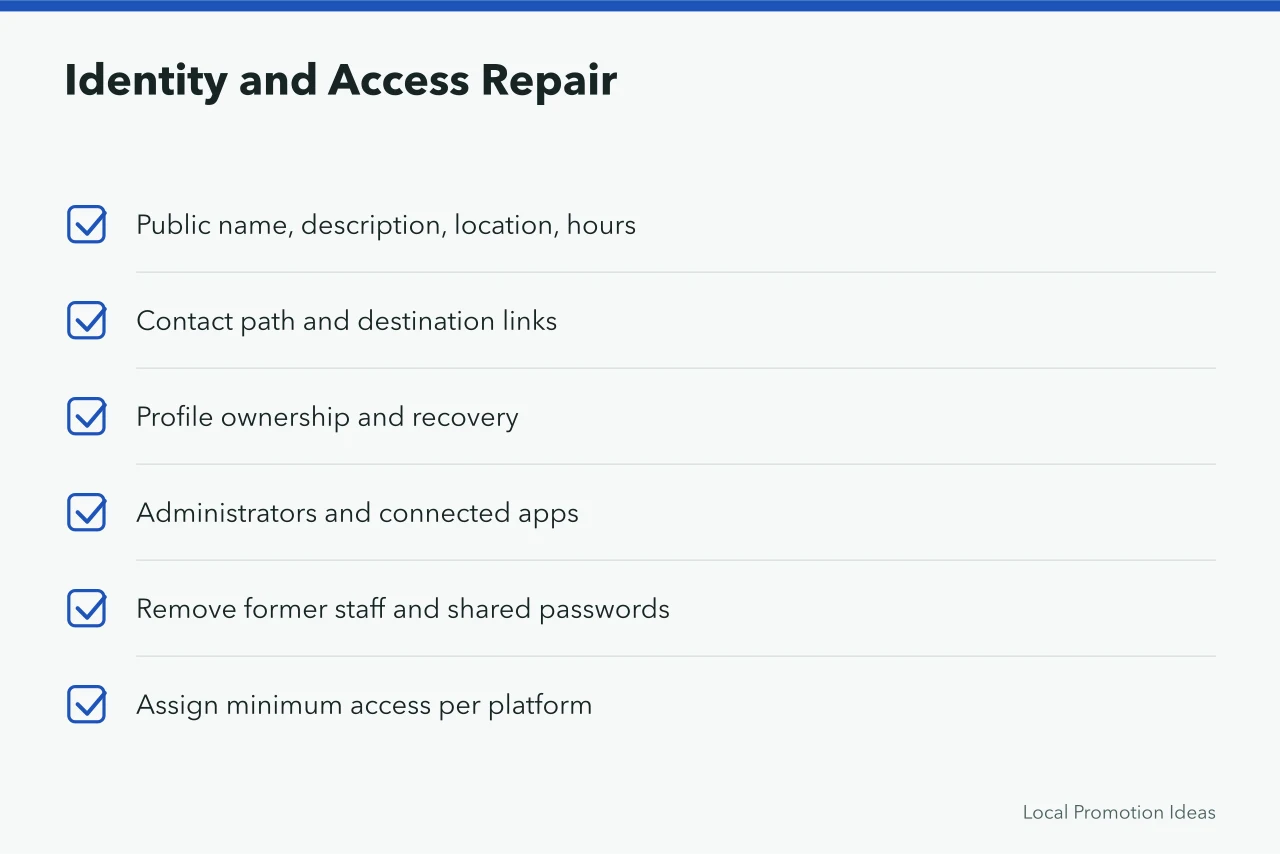
Confirm the public name, description, location, hours, contact path, destination links, profile ownership, recovery, administrators, and connected apps. Remove former staff and unsafe shared passwords.
Meta Page roles are Admin, Editor, Moderator, Advertiser, and Analyst. LinkedIn Page roles are Admin, Content Admin, Analyst, and Curator. Assign the lowest role that lets each person do the job. A typical access and profile audit takes 2 to 4 hours per platform.
Before: "Local service provider. We help businesses grow." After: "Same-day appliance repair in Dayton. Call before 2pm for a same-day visit. Licensed and insured."
Mine real customer language
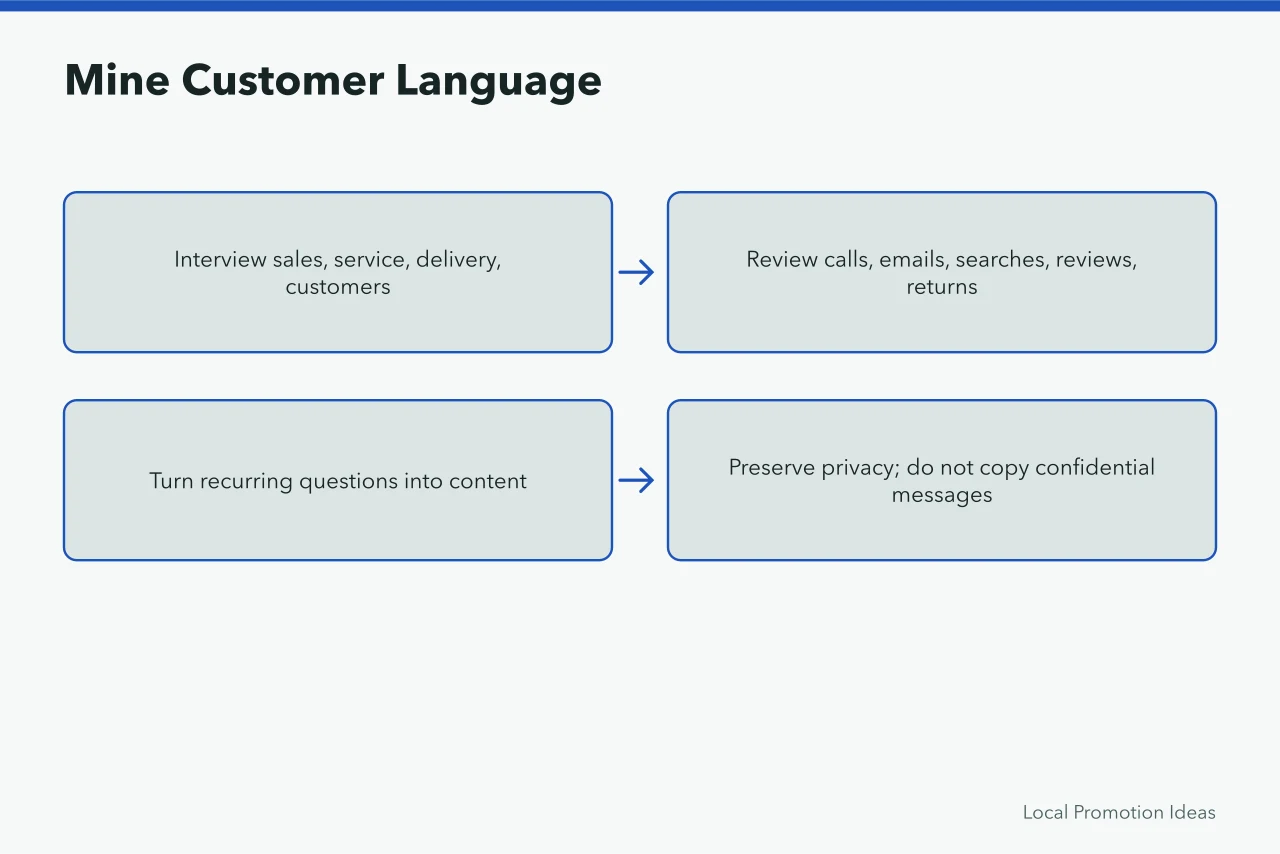
Interview sales, service, delivery, and customers. Review calls, emails, searches, reviews, returns, and objections. Real questions sound like "Do you take insurance?" or "How fast can you fix a cracked screen?" Turn recurring questions into demonstrations, comparisons, checklists, explanations, and response templates. Preserve privacy and do not copy confidential messages into content.
Improve the first five seconds
YouTube's engagement analytics guide identifies watch time, average view duration, audience retention, end-screen click rate, and other engagement reports. It also notes that counts can differ by surface and that invalid activity may be removed. Use retention as diagnostic evidence about viewing behavior, not proof that an opening caused a sale.
State the problem, audience, result, or surprising evidence early. Make the post understandable without sound where practical. Remove long introductions, unsupported superlatives, and vague calls to engage. A useful opening earns attention by clarifying value, not by withholding the answer.
Before: "We are excited to announce our new blog post!" After: "If your invoice is late, here is the two-line reminder that gets paid."
Strengthen proof and destinations
Show the process, limits, source, date, and real next step. Match every link to the promise in the post. Test the landing page on mobile, including availability, pricing context, forms, phone, booking, accessibility, confirmation, and customer-service ownership. A documented small business marketing strategy keeps proof and destinations aligned with the promised customer action.
Respond as part of the product
Set response windows and escalation for ordinary questions, complaints, private data, threats, fraud, safety, and regulated matters. Move account-specific issues to a secure channel. Record repeated confusion as an operations or content problem.
Compare useful cohorts
LinkedIn's current content analytics documentation defines impressions, members reached, clicks, reactions, comments, reposts, and engagement rate for Page content and notes that some figures are estimates or delayed. It also distinguishes certain boosted-post reporting from Campaign Manager, which is why paid status and source system belong in every comparison.
Use platform analytics to group posts by objective, format, topic, audience, and paid status. Compare medians over like periods, then reconcile with inquiries and sales.
YouTube, LinkedIn, and other platforms define metrics differently, so do not combine unlike counts into one score. Reliable small business marketing benchmarks depend on comparing like periods instead of mixing unlike platform counts.
Improve one constraint per cycle, document the decision, and stop work that does not help the chosen audience or outcome. Keep the team focused on one documented question, change, and result at a time.
Improvement sequence
| Stage | Evidence | Pass condition |
|---|---|---|
| Outcome | Audience, action, capacity, baseline | One decision is clear |
| Experience | Profile, post, destination, response | Promise is fulfilled |
| Learning | Comparable cohort, customer, sales data | Next change is justified |
For tool choices, the GOV.UK technology selection guidance suggests checking data control, security review, and ownership cost before you commit. The CISA software acquisition fact sheet covers supply-chain exposure, deployment, and vulnerability management. Ask those questions when you connect a new app to your business accounts.
Common questions
What should a small business fix first?
Fix lost account control and the customer handoff that most often creates wrong information, broken destinations, unanswered demand, or poor-fit inquiries.
Should the business post more to improve?
Test a higher cadence only if comparable data shows the current cadence is the constraint. If proof or handoff is the constraint, more posts will not help.
How long should a test run?
Run long enough to collect comparable observations across a representative operating period, with a stated hypothesis, success measure, guardrail, and stop rule.