Costs
Part of Social media strategy explained for business teams
Social media strategy best practices for business teams
Social media strategy best practices for 2027 covering purpose, research, platform roles, content, accessibility, secure access, measurement, and reviews.
What to take away
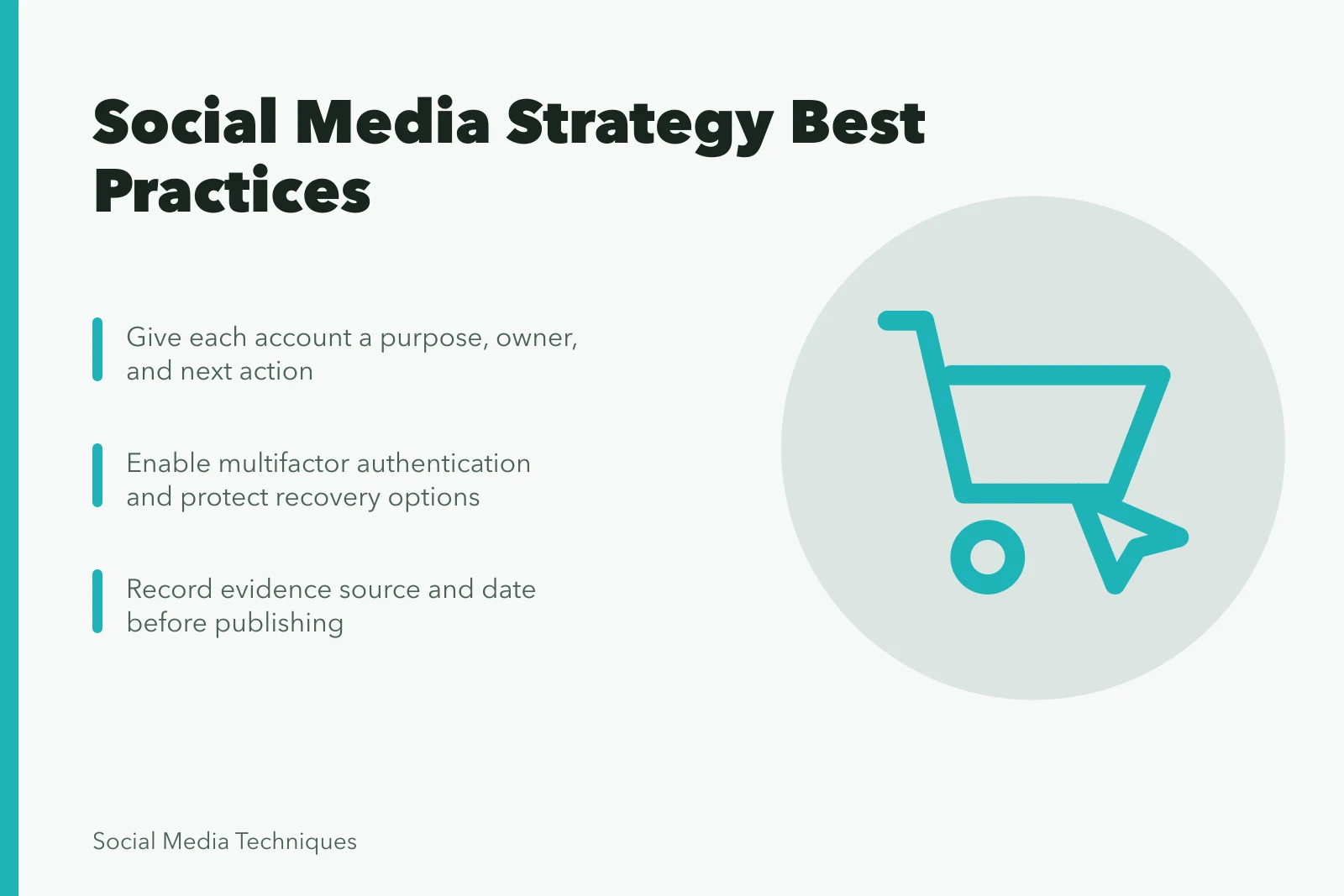
- Give every account a distinct purpose, audience context, owner, and next action.
- Treat evidence, rights, accessibility, secure access, and community response as publishing requirements.
- Use objective-based metrics and end each review with a named decision and owner.
Social media strategy best practices help a team make consistent decisions without turning the plan into rigid platform folklore. The strongest practices connect business purpose, audience evidence, production reality, governance, and measurement. They remain useful when a feature or format changes.
Protect access and endorsement quality
CISA's guidance to turn on multifactor authentication explains that a second identity check adds protection even if a password is stolen. Social account owners should enable the strongest available method, protect recovery options, and test backup access before an incident.
The current federal Endorsement Guides state that endorsements must reflect honest opinions or experience and describe clear and conspicuous disclosure as difficult to miss and easy to understand. The exact facts and audience still matter, so uncertain cases need qualified review.
Give every account a job
State which audience context, business outcome, content role, and next action belong to each platform. Close or pause redundant accounts. Copying every post across every network is not a strategy.
Research before publishing
Use customer questions, interviews, support records, search behavior, communities, and native analytics. Record the source and date. Do not turn a few comments into a broad audience claim. A social media strategy checklist keeps that evidence tied to outcomes, audiences, and account roles before sign-off.
Design repeatable content structures
Build subject pillars around audience needs and real expertise. Use formats such as explanations, demonstrations, questions, expert analysis, event recaps, and approved customer stories. Keep a balance of evergreen, timely, and campaign material.
Protect quality and access
- Use written briefs and reliable sources.
- Document claims, rights, permissions, and approvals.
- Provide alt text, captions, contrast, and readable layouts.
- Limit account permissions and maintain backup ownership.
- Test links, tags, formats, and destination pages.
- Define comment, message, crisis, correction, and removal rules.
Make endorsements transparent
Material brand relationships should be made visible to the intended audience, and endorsements should reflect honest experience and supportable claims. Put the wording, placement, claims, and review responsibility in the brief.
Measure from the objective
Use native definitions and preserve export dates and filters. Platforms can organize reports differently, so similarly named metrics may not be directly comparable. Keep organic, boosted, and paid activity separate.
Review and make decisions
Hold a regular operating review and a quarterly strategy review. Identify what produced useful audience or business action, where the workflow failed, and which assumptions changed. Every review should end with continue, revise, stop, or test decisions and named owners.
Avoid practices presented without conditions, such as a universal posting frequency or engagement target. A useful practice explains the purpose, context, and evidence needed to know whether it works for this team.
Quick comparison
Operating proof
- Account purpose
- Written role, audience, owner
- Content quality
- Brief, source, rights, approval
- Secure access
- Named roles, MFA, backup, offboarding
- Measurement
- Definition, baseline, action
Failure signal
- Account purpose
- Duplicated or abandoned account
- Content quality
- Repeated correction or delay
- Secure access
- Shared or stale credentials
- Measurement
- Reporting without a decision
Assign the practice
The NIST Privacy Framework starting guide outlines a voluntary process for identifying and managing privacy risk. Use it to assign data and response owners for social media strategy best practices; it is not legal clearance.
The CISA business-system logging guidance explains how event records support security review. Preserve appropriate social media strategy best practices access, change, failure, and correction records without claiming that logging validates a metric.
Common questions
Which social media strategy best practice matters first?
Define why the account exists, who it serves, who owns it, what it publishes, and which result would change a decision.
Why is account security part of strategy?
Lost or excessive access can disrupt publishing, expose data, damage trust, and prevent the team from responding during an incident.
Are universal posting rules a best practice?
No. Posting pace should reflect audience value, production quality, support coverage, comparable evidence, and the role of the account.