Rules
Part of Social media strategy explained for business teams
8 lessons from social media strategy case studies
Eight lessons from named social media campaigns, from the Ice Bucket Challenge to Duolingo, with the Canadian marketing rules that shape each one.
What to take away
- Each social media strategy case study below draws its lesson from a named campaign, not a method memo. The ALS Ice Bucket Challenge, Wendy's Twitter replies, and Duolingo's TikTok owl are the evidence.
- Canadian campaigns answer to PIPEDA, CASL consent rules, Quebec's Bill 96 French-language ad requirements, and CRA treatment of influencer gifts. Confirm your own position with a lawyer or accountant.
- A case study that hides its weak posts teaches nothing. Report the whole set, not the best creative.
- Keep the native analytics export, its filters and its date range. A metric without its definition is a rumor.
- Copy the structure of a campaign you admire, never its numbers. Your baseline is your own.
Lesson 1: give the audience a role, not a message
The ALS Ice Bucket Challenge ran through the summer of 2014. It asked people to film themselves dumping ice water, donate, post the video, and name three friends. Pete Frates and Pat Quinn, both living with ALS, are credited with spreading the format.
Participants made the content; the charity set the rule. The ALS Association reported the campaign raised over $115 million.
The lesson is the repeatable mechanic, not the dollar total. A campaign that gives the audience a repeatable action travels further than one that asks them to watch.
Lesson 2: a reply can outperform a post
Wendy's roasting competitors on Twitter through 2017 built a voice people came back for. The exchange with Carter Wilkerson, who asked how many retweets would earn him a year of free nuggets, pulled roughly 3.4 million retweets after the account answered "18 million."
Duolingo's TikTok owl, a mascot with a personality and a posting rhythm, did the same job years later.
Both accounts answered comments in public. The replies were the campaign. A brand that only broadcasts is invisible in the same feed.
Lesson 3: one platform, done properly
The Windsor Salt strike account and the BC Wildfire Service feed both worked because they picked one channel and posted into it constantly. Neither tried to be everywhere. BC Wildfire runs evacuation alerts and fire-status updates from @BCGovFireInfo.
Choose the platform where your buyer already is. A social media strategy that lists six channels usually runs none of them well.
Lesson 4: set the baseline before you start
Air Canada's 2017 passenger-rights response and the Rogers outage of July 8, 2022 both produced social traffic spikes that measured anger, not growth. Rogers restored service and later credited customers; the mentions still came.
Without a pre-campaign baseline, a spike looks like success. Pull ninety days of data before launch. The benchmark set you keep is the only honest comparison you will have.
Lesson 5: budget the boost, not just the post
A boosted post and a Facebook ads campaign are different purchases. Boosting extends a post to a chosen audience; ads buy placements against an objective. Both bill in the same currency and neither guarantees a follower count or a revenue figure.
Meta bills both from the same ad account, usually by CPM or CPC. In most markets, feed CPMs typically run from a few dollars to the low teens. Boosted posts often land at the cheaper end, because reach is a lighter objective than a conversion. Your country, category, and audience size drive the spread.
Write the split as variables: monthly budget B, boost share x, ads share (1 minus x). Test, then move x toward what your own analytics support.
Lesson 6: consent is a Canadian design decision
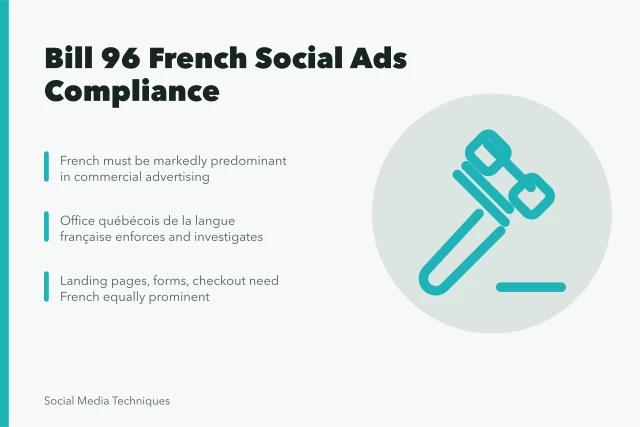
CASL, in force since July 1, 2014, requires consent before a commercial electronic message, and the maximum penalty for a business runs to $10 million per violation. PIPEDA governs how you collect and use the personal data behind your targeting. Quebec's Bill 96, adopted in 2022, requires French to be markedly predominant in commercial advertising in the province.
None of this is legal advice. Name the statute to your lawyer and let them tell you what your campaign needs.
Lesson 7: disclose the relationship
The FTC's advertising substantiation policy requires a reasonable basis before objective claims go out. Its guidance on soliciting and paying for reviews covers fake feedback, conditioned incentives, and hidden relationships. The FTC's review rule took effect in October 2024, with civil penalties that can exceed $50,000 per violation.
Canadian practice runs the same way. Disclose paid partnerships, and treat CRA questions about gifted product as a question for your accountant, not a caption.
Lesson 8: review the last ninety days before you change strategy
Most strategy resets happen before the previous quarter is honestly read. The UK Government Communication Service's Evaluation Cycle separates five stages. These stages stop a rewrite from erasing a working campaign:
Review the last ninety days
- inputs
- outputs
- outtakes
- outcomes
- impact
A social media strategy checklist keeps the review in order: what ran, what it cost, what moved, what to keep.
Worked example: reading one campaign
Take a single boosted post. Input is the creative time and the spend. Output is the post itself. Platform response is reach and saves. Business action is the inquiry it produced. State the limit at each level: shared costs, definition, attribution.
Reading one campaign
| Level | What it is | Limit to state |
|---|---|---|
| Input | Creative time, media spend | Shared costs |
| Output | The post, the replies | Completion is not outcome |
| Platform response | Reach, saves, clicks | Definition and selection |
| Business action | Inquiry, application, sale | Attribution and other channels |
When a case study becomes a social media strategy example that other teams copy, the limits matter more than the headline number.
Common questions
What should a social media strategy case study include?
Include the original decision, the audience, the baseline, and the hypothesis.
Include the work, the distribution, the cost, and the platform evidence.
Include the business action and the limits. End with the next decision.
Should a failed campaign become a case study?
Yes, when the method and the operating lesson are useful and the result is reported honestly. A failed hypothesis with clean evidence is worth more than a vague success story.
Can a platform's own success story be used as proof?
Cite it as a provider-selected example, not as representative proof or a forecast for your account. Record the market, spend, and timeframe, and note what the provider left out.